WHERE MY HEART MEETS YOUR SHELF!

From Broken Grammar to Published Poet
I grew up selling vegetables, missing parents, and writing messy notes. This is how feedback on bad grammar turned me into a writer.
Nephi Mupombwa Moses Lurie
6/11/202611 min read
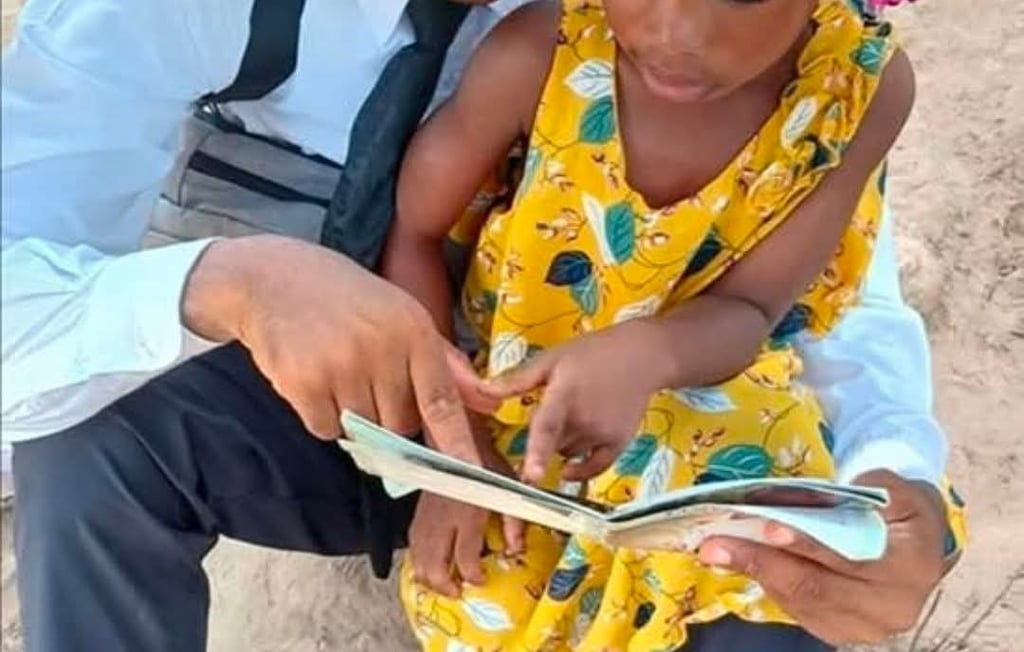
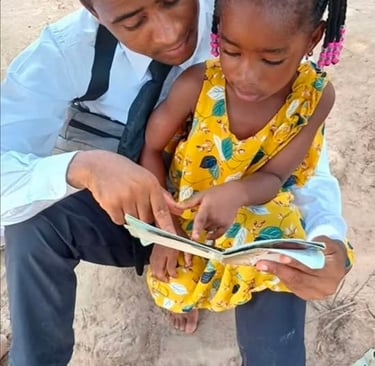
The Boy With No Books Built a Library
I didn’t grow up in the city. I didn’t grow up with both my parents in the same house. And I didn’t grow up with money for school fees every term.I grew up with my auntie and my uncle. Down in the country. Far from town. Far from traffic. Far from streetlights that stay on all night. Our life was simple. It was hard. And it was full of love in the way that only family who chooses you can give.
The mornings started before the sun decided to show up. My uncle would already be outside, squinting at the sky like he could negotiate with the clouds. Farmers don’t get weather apps. They get a feeling, a wind, and years of experience. My auntie would be at the fire, blowing into the ashes until the flames agreed to wake up. And me, I was the boy with sleep still fighting in my eyes, trying to tie my shoes the way she taught me. Double knot. Always double knot. Because in the country, things come undone if you don’t tie them properly. Shoes. Promises. Plans. Futures.
Farming was not kind where we lived. The soil tried. God knows it tried its best. But the rains didn’t always listen. Some seasons were generous and the vegetables grew like they were celebrating. Some seasons forgot us completely and we stared at the sky like it owed us money. So we learned to survive with our hands. We planted rape, covo, tomatoes. We weeded until our backs complained. We carried water in buckets that made your shoulders burn by the time you reached the garden. We harvested what the ground gave us and walked to the roadside to sell it.
I remember the weight of those crates. I remember the dust that settled on my feet and turned them the color of the road. I remember my auntie wrapping vegetables in newspaper because plastic was for people who had money to waste, and we were not those people. And I remember something else that mattered more. We laughed while we worked. We told stories while weeded. We sang while we carried water. Poverty was real, but bitterness was not allowed in that house. My auntie said, “If you carry bitterness, you won’t have hands left to carry tomatoes.” So we laughed instead.
We didn’t have much. But we were rich in another way. We were together. At night, when the paraffin lamp was low and moths kept throwing themselves at the glass like they were trying to get into heaven, we would sit and talk. My uncle would tell stories about his childhood that got better every time he told them. My auntie would tell me how to choose a good man when I grew up, and she had very specific requirements. And me, I would listen and store everything in my mind like a small suitcase. Because I knew one day I would need those memories. I didn’t know I would turn them into books. But my mind knew to keep them safe.
My mother was in another country. My father was somewhere else too. Divorce splits a family across maps. It puts your mother’s voice on the phone and your father’s advice in short visits. I was a little boy living in one place while my heart was stretched across three different homes. That’s a heavy thing for a child to carry. You learn to be okay with “see you soon” because “see you tomorrow” wasn’t always possible. But my auntie and my uncle did their best to make me feel like I belonged. They never made me feel like a burden. They never made me feel like a visitor who overstayed. They made me feel like a son. And I thank God for them every single day. If I am anything good today, they planted that seed and watered it with patience.
The day my father planted a seed in me
I was about 4 or 5 years old when I stayed with my father for a short time. I don’t remember many things from that age. Children forget fast. Their minds are like sieves. But I remember one evening clearly. The sky was orange like someone had spilled paint. The air was cool. My father called me close and sat me on his knee. He didn’t have much to give me. No toys from the shop. No sweets wrapped in shiny paper. But he had words. And words, I learned later, are worth more than toys.
He looked at me with those father eyes that make you sit up straight even when you don’t want to. And he said, “Son, keep a journal. Write things down. Keep history. One day you’ll want to remember. One day your children will want to read and find joy from it.
”At 4 years old, I didn’t understand what “history” meant. History sounded like something in school books with pictures of dead people and old wars. I didn’t know he was talking about my life. He was telling me that a little boy’s thoughts mattered enough to be recorded. That my memories were not small. That my feelings were not silly. That what happened to me was worth writing down. That sentence entered my chest and stayed there like a seed planted in wet soil after the first rain. I didn’t know it yet, but that seed would grow for the rest of my life. It would grow through drought. It would grow through good seasons. It would grow until it became books.
Years passed. I was back with my auntie and uncle. School was not easy because money was short. Some terms I went to school. Some terms I stayed home and helped in the garden. My uniform was old. The elbows were shiny from too much washing and too much leaning on desks. My exercise books were shared. I would tear pages from the back of an old book and use them for new work. My grammar was not good. If you had read what I wrote back then, you would laugh. The spelling was broken. The sentences were fighting each other. The punctuation was confused and lost. But the feelings were real. And feelings don’t need perfect grammar to be true. A crying child doesn’t check spelling before tears fall.
Age 8, 9, 10: I started writing so I wouldn’t forget
Around that age, the seed my father planted started to wake up. I remembered what he said. “Keep history.” So I started jotting things down. I had no proper journal. I used whatever I could find. The back of a school exercise book. Loose paper from the shop. Even margins of old newspapers that were used to wrap tomatoes.
I wrote little memories. The way my cousin could mimic the teacher and make the whole class laugh until we had tears running down our faces and the teacher pretended she wasn’t laughing too. The way my uncle whistled while he worked in the garden, like the work was lighter when there was music in the air. The taste of sweet potatoes roasted in ashes, with the skin black and the inside sweet like sugar that God made himself. The sound of rain on a tin roof after months of dry land, and how everyone in the house would stop talking just to listen, because that sound was better than any song on the radio.
I wrote because I was afraid I would forget. Children forget fast, but pain makes you remember. Joy makes you remember too. I wanted to keep both. I wanted to keep the days when we had chicken and the days when we only had sadza and salt. I wanted to keep the days when my mother called and the days when the phone line was dead. Writing became my time machine. When I opened my little notes, I could travel back.
And I wrote because writing made the hard days feel softer. When you put a heavy feeling on paper, it weighs less in your chest. That’s something nobody teaches you in school. But I learned it at age 10 with a dull pencil and a borrowed notebook. I learned that a problem shared with paper is a problem cut in half.
Then something happened that changed everything. I showed one of my messy notes to someone. Maybe a friend at school. Maybe a neighbor’s child. Maybe my auntie while she was cooking. I don’t remember who was first. But I remember what they did. They read it. Then they smiled. Then they said, “Wow. You write so well. This made me feel something.
”Me? With my broken grammar and no proper school? They felt something. My words reached them. My little memory became their moment too. My sadness made them sad for a second. My joy made them smile for a second.
That feedback changed me. Every time someone read my notes and their face changed, I wanted to write more. I realized words could do something. Words could encourage. Words could make someone happy for 30 seconds. Words could remind someone they were not alone in the feeling they were carrying. And if words could do that, then I wanted to give more of them to the world. I wanted to be a person who handed out happiness with a pen instead of keeping it all to myself. I wanted to be the reason someone smiled after a hard day.
From journals to poems to books
As I grew older, life kept teaching me lessons. Some were painful. Like missing a parent who was far away and not understanding why adults choose to separate when children want them together. Some were funny. Like watching a chicken run into the house during a serious family meeting and everyone pretending they didn’t see it while the chicken judged all of us. Some were so small you would miss them if you weren’t paying attention. Like the way my auntie would always save the last piece of bread for me even when she was hungry herself. Like the way my uncle would check the locks twice at night even though he knew they were fine.
But I was paying attention. Because I had a journal to fill. Because I had a promise to keep to my father. Because history needed to be written, and if I didn’t write it, who would?If I saw something funny on the street, I would turn it into a quote. Short. Sharp. Something you could remember and repeat to a friend. If I felt something heavy in my chest, I would turn it into a poem. Line by line. Breathing with the pain until the breathing became easier. If a memory stayed in my mind for days and refused to leave, I would stretch it into a short story.
Give it characters. Give it dialogue. Give it an ending, even if real life didn’t have one yet.Writing became my way of understanding life. My way of keeping joy. My way of keeping history, just like my father said. When things were confusing, I wrote to find clarity. When things were beautiful, I wrote so I wouldn’t lose it. When things were ordinary, I wrote because I decided ordinary people deserve beautiful records too. Not just kings and presidents. The boy who sells tomatoes also deserves a page.
Today, I don’t run out of words. Because life never runs out of moments. A child laughing at a taxi rank. A woman bargaining at the market with hands that have worked all week. An old man telling the same story twice because the story is that good and the audience is new. All of it is material. All of it is beauty. All of it deserves to be remembered. All of it deserves to be written down so it doesn’t disappear when the person who remembers is gone.
Why I built LugenZim Tech
I built LugenZim Tech because I am still that little boy with a journal. Only now, the journal is bigger. And the pen is not just for me anymore.I built it because I know what it feels like to have stories but no shelf. To have poems but no platform. To have words but no door to knock on. For years I was that writer saying “my book is coming soon.” And I was tired of that phrase. Tired of watching other people’s books live on shelves while mine lived in my phone. So I decided to build the place I was waiting for. If the door doesn’t exist, you build the door.
I built LugenZim Tech because I want people who grew up like me to know their story matters too. You don’t need perfect English. You don’t need a university degree. You don’t need to come from a rich family in Borrowdale with a swimming pool. If you have memories, if you have feelings, if you have something to say, then you have something the world needs. Your grammar can be fixed by an editor. Your story cannot be replaced by anyone else. Only you lived it.
I built it because writing saved me. It gave me company when I was alone in the country with no other children my age. It gave me hope when school fees were late and we didn’t know what would happen next. It gave me a voice when I felt invisible because I was just a boy selling vegetables by the roadside and people walked past without seeing me. If words can do that for a child with a broken pencil and no money for new books, I believe they can do something for you too. I believe they can lift you.
This platform is my answer to that. It’s built for Zimbabwe. It understands USD and ZWL. It understands that sometimes you buy data before bread because data is also food for the soul. It understands that WhatsApp is how we communicate, how we laugh, how we mourn. It understands that load shedding is not an excuse, it’s a reality we write by candlelight. And it understands that a writer in Harare deserves the same respect as a writer anywhere else in the world. Same words. Same value.
This is just the beginning
This is my first blog post. Not a sales pitch. Not a list of books. Not “buy this now.” Just me introducing myself to you. Just me keeping my father’s promise. Just me showing you the hands that will write the books.
I grew up selling vegetables. I grew up with love but without much money. I grew up writing broken sentences that made people smile. I grew up listening to stories under a paraffin lamp while moths auditioned for a role in our drama. I grew up missing parents who were far away but loving aunties and uncles who were close enough to fix everything with a hug. And today, I’m still writing. Only now the grammar is better. Only now the stories are bigger. Only now the platform is mine and the door is open.
If you’ve ever felt like your background was too small to matter, I wrote this for you. If you’ve ever thought “who would want to read my story,” I’m raising my hand. I would. Because I know what it feels like to come from the country, to work with your hands, to be the child of divorced parents, to have an old uniform, and still choose joy. Still choose to write. Still choose to believe that your life is worth recording.We survived by planting vegetables in hard soil. Now we survive by planting words in hard times. Same principle. Put something in the ground. Water it with effort. Wait with patience even when nothing is happening. Harvest hope when it’s ready. And share it with anyone who is hungry for something real.
Before you go, tell me this
What’s one memory from your childhood that still makes you smile today? The small one. The one nobody asks about in big conversations. The smell of something cooking in your grandmother’s kitchen that you can still taste if you close your eyes. The sound of your uncle’s whistle while he worked like music was free labor. The way your aunt used to tie your shoes with a double knot because she said “things that matter should be tied twice so they don’t fall apart.
”Drop it in the comments below. Or send me a WhatsApp message. Or reply to this post on social media. I read every single message myself. No assistant. No bot. Just me. Because I’m still collecting history. Still keeping the little moments that make life beautiful. Still keeping the promise a father made to a 4 year old boy sitting on his knee.
Thank you for reading all the way here. Thank you for giving this country boy your time and your attention. The books will come. The poems will come. The quotes and short stories will come. But first, I wanted you to know the person behind the words. The boy who grew up farming vegetables. The boy who kept a journal because his father said to. The boy who decided his story was worth writing even when his spelling was not.
We come from soil. We grow with words. And we are just getting started. If this made you smile, if this made you remember, if this made you feel less alone, then share it with someone else. Someone else needs to know their story matters too. Someone else needs permission to write.With so much gratitude and a heart that is full like a basket of fresh tomatoes,
Nephi Mupombwa Moses Lurie
The boy who kept his father’s advice
The boy who writes to keep history
Founder, LugenZim Tech
contact.nephilurie@lugenzim.tech | WhatsApp: +263773785535
Brand
Join us and be the first to explore stories that speak to your heart.
Know More
Newsletter
© 2022. All rights reserved.